Realistic Budget 2026: Cut 20% Unnecessary Spending

Advertisements
Creating a realistic budget in 2026 starts with reviewing actual income and several months of spending, identifying discretionary expenses and setting achievable savings targets.
Cutting 20% of unnecessary spending can be a useful personal goal, but the appropriate percentage depends on each household’s finances.
How to Create a Realistic Budget in 2026: Cutting 20% of Unnecessary Spending is less about following a universal formula and more about understanding where your money is currently going.
A practical realistic budget should reflect real take-home income, recurring bills, irregular expenses, debt obligations, savings goals and discretionary purchases instead of relying on idealized spending assumptions.
For households looking to create additional room in their finances, reducing selected non-essential spending by 20% can provide a measurable target without requiring the elimination of every enjoyable expense.
Understanding the 2026 economic landscape for budgeting
Household budgeting in 2026 continues to be influenced by relatively elevated borrowing costs, inflation pressures and uncertainty surrounding economic and geopolitical developments.
The Federal Reserve maintained the federal funds target range at 3.50% to 3.75% through its July meeting, meaning financing costs remain important for households carrying variable-rate or new debt.
Rather than attempting to predict every economic change, households can build realistic budget with enough flexibility to absorb higher bills, irregular expenses and changes in income.
Key economic indicators to monitor
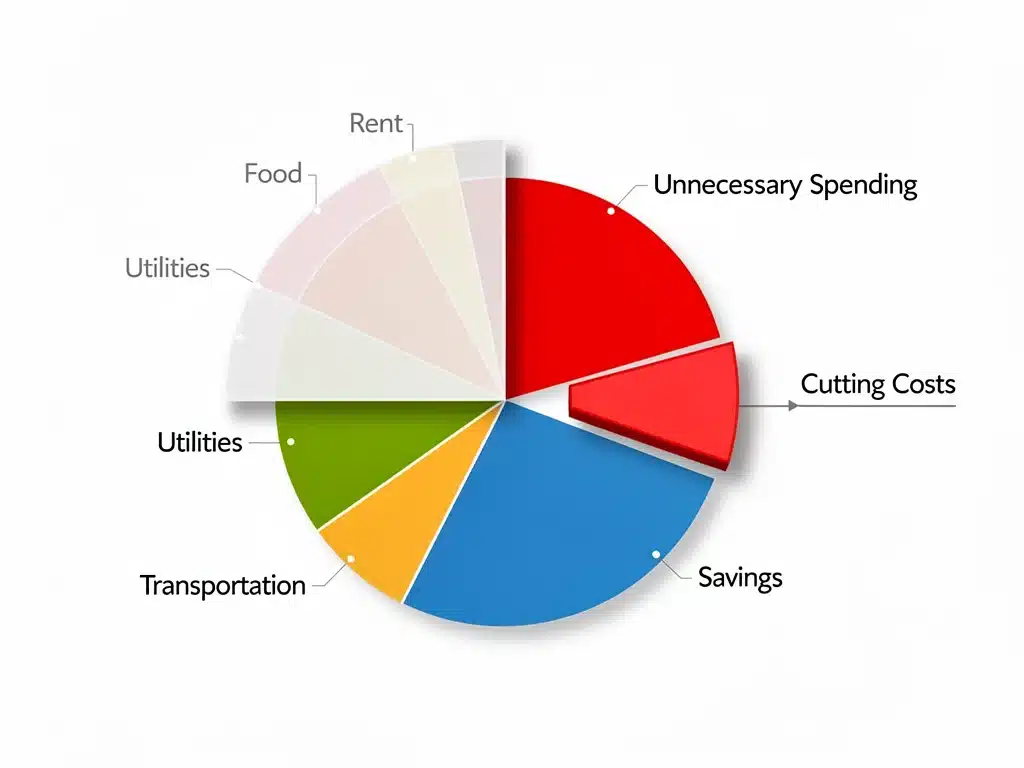
Inflation matters because changes in food, energy, housing and service prices can alter how much of a household’s income is required for essential expenses.
Interest rates influence credit cards, auto loans, mortgages and savings products, potentially changing both borrowing costs and the returns available on cash savings.
Employment and income conditions are equally important because even a carefully designed realistic budget needs to be revised if household earnings or working hours change.
- Inflation: Monitor changes in essential household costs rather than focusing only on the headline rate.
- Interest rates: Higher rates can increase borrowing costs while also affecting savings yields.
- Employment: Income stability determines how aggressively a household can save or repay debt.
- Energy costs: Fuel and utility changes can quickly affect monthly cash flow.
Start with what you actually spend
The first step toward a realistic budget is reviewing what has actually happened in your accounts rather than immediately deciding what your spending should look like.
Checking several months of bank and credit-card statements helps capture recurring bills, occasional purchases and expenses that do not appear every month.
This historical view creates a more accurate baseline and reduces the risk of building a realistic budget that looks balanced on paper but repeatedly fails in practice.
Gather several months of financial information
Start with checking accounts, credit cards, payment apps and any other accounts used for routine household purchases and bills.
Reviewing multiple months is particularly useful because expenses such as insurance, medical costs, gifts, travel and vehicle maintenance may occur only occasionally.
Include take-home income as well as any regular secondary income so the final spending plan can be compared with money actually available after taxes and deductions.
Categorize expenses realistically
Separating expenses into categories makes it easier to determine which costs are difficult to change and which offer more flexibility.
Housing, utilities, insurance, minimum debt payments and basic groceries generally belong in essential or obligation categories, although actual amounts vary by household.
Dining, entertainment, optional subscriptions and discretionary shopping may provide more room for adjustment, but even these categories should reflect personal priorities.
- Fixed obligations: Rent, mortgage, insurance and scheduled loan payments.
- Variable essentials: Groceries, utilities, fuel and necessary transportation.
- Irregular expenses: Repairs, medical bills, gifts, travel and annual fees.
- Discretionary spending: Entertainment, dining out and optional purchases.
What does cutting 20% of unnecessary spending mean?
A 20% reduction should be treated as a personal budgeting experiment rather than a financial rule that applies equally to every household.
The percentage should normally be calculated from the portion of spending that you have already identified as discretionary or lower priority, not from total household expenses.
For someone spending $600 per month in selected discretionary categories, for example, a 20% target would mean identifying approximately $120 in reductions.
Define the spending base first
Before calculating 20%, decide exactly which expenses belong in the group you are trying to reduce so that essential obligations are not accidentally included.
A household might choose restaurant meals, subscriptions, impulse purchases and optional entertainment as its initial discretionary-spending base.
Someone with very little discretionary spending may need a smaller target or may find that improving income, refinancing eligible costs or restructuring debt is more realistic.
Do not force cuts from essential expenses
Reducing groceries, healthcare, insurance or necessary transportation simply to achieve an arbitrary percentage can make a realistic budget less sustainable rather than more effective.
The objective is to identify spending that provides relatively little value compared with the financial goals that could be funded by redirecting that money.
A realistic budget should still leave enough room for essential needs and some discretionary enjoyment so that the plan can be maintained over time.
Identifying unnecessary spending
Unnecessary spending is highly personal because an expense that offers little value to one household may be important to another person’s routine or quality of life.
The most useful approach is to identify purchases that are forgotten, duplicated, rarely used or repeatedly made without much consideration.
Subscriptions, convenience purchases, delivery fees and impulse shopping are common places to look, but they should be evaluated using actual account history.
Common areas to review
Recurring subscriptions are a useful starting point because they can continue being charged long after a customer stops regularly using the service.
Dining and delivery spending can also become significant when multiple small transactions are added together across an entire month.
Shopping patterns deserve similar attention, particularly repeated purchases triggered by promotions, social media or convenience rather than a planned need.
- Unused subscriptions: Streaming, apps, software and memberships.
- Dining and delivery: Meals, service fees and delivery charges.
- Impulse purchases: Unplanned online or in-store purchases.
- Duplicate services: Multiple products providing similar benefits.
- Banking fees: Charges that may be avoidable with another account or payment method.
Calculate the annual cost
Monthly expenses can appear relatively small, which makes it easy to underestimate their impact on longer-term financial goals.
Multiplying a recurring expense by twelve provides a clearer view of how much it costs over a year and whether that amount still feels worthwhile.
This calculation can also make prioritization easier by showing how redirecting several small expenses could contribute to debt repayment or emergency savings.
Practical strategies for cutting discretionary spending
The most sustainable spending reductions usually come from changing a few repeat behaviors rather than attempting to eliminate every optional purchase at once.
Start with categories that offer the highest savings with the smallest effect on daily life, such as unused subscriptions or services that can be downgraded.
After those easier reductions, review larger discretionary categories and decide whether frequency, quantity or price can be reduced without eliminating them completely.
Implement spending reduction techniques
Instead of banning restaurant spending completely, a household might establish a monthly limit or reduce the number of meals purchased outside the home.
Subscription services can be reviewed individually, keeping frequently used options while canceling those that provide little value or overlap with another service.
For discretionary shopping, using a waiting period before completing an unplanned purchase can create time to decide whether the item is genuinely worthwhile.
- Reduce frequency: Enjoy discretionary activities less often rather than eliminating them completely.
- Cancel unused services: Review recurring charges individually.
- Compare prices: Reassess insurance, internet and other recurring bills when appropriate.
- Use a waiting period: Delay non-essential purchases before committing money.
Try a temporary no-spend experiment
A short no-spend period can help reveal which discretionary purchases occur automatically and which ones genuinely contribute to quality of life.
The exercise usually works best when essential spending remains allowed and only selected categories, such as entertainment shopping or restaurant purchases, are temporarily paused.
At the end of the experiment, review what was easy to skip and what felt important enough to restore instead of treating the challenge as permanent deprivation.
Use the savings intentionally
Reducing expenses is more useful when the money saved is assigned to a specific purpose rather than simply remaining available for another discretionary purchase.
Possible priorities include building emergency savings, paying down expensive debt or contributing toward a clearly defined short- or long-term goal.
The most appropriate destination depends on the household’s financial situation, interest rates, existing savings and upcoming obligations.
Build an emergency reserve
An emergency fund is money specifically set aside for unexpected expenses such as repairs, medical bills or temporary loss of income.
There is no single dollar amount that is appropriate for every household because emergency needs depend on expenses, income stability and personal circumstances.
Even small recurring contributions can improve financial resilience by reducing the likelihood that an unexpected bill must be financed entirely with credit.
Consider high-cost debt
Households carrying high-interest credit-card or other expensive debt may choose to redirect part of their spending reductions toward faster repayment.
Paying additional principal can reduce future interest costs, although borrowers should still maintain enough cash to cover essential bills and unexpected expenses.
The best repayment strategy depends on interest rates, minimum payments, cash flow and whether any debt carries penalties or special terms.
Leveraging technology for realistic budget management in 2026
Digital tools can simplify budgeting by importing transactions, organizing spending categories and displaying trends that may be difficult to identify manually.
However, an app does not automatically create a successful realistic budget; users still need to review categories, correct errors and decide how money should be allocated.
Consumers should also review fees, privacy practices and account-linking permissions before providing a financial application with access to banking information.
Budgeting tools available in 2026
YNAB remains an active budgeting service in 2026 and offers bank transaction imports, spending reports, goal tracking and tools for planning how available money will be used.
Credit Karma incorporates some money-management functions associated with the former Mint ecosystem, including spending and cash-flow monitoring for eligible users.
A spreadsheet or tools already provided by a bank or credit union can also be effective for people who prefer not to connect their accounts to another service.
- YNAB: Planning, transaction importing, targets and spending reports.
- Credit Karma: Offers selected spending and financial-monitoring features.
- Bank tools: Many banks and credit unions include spending categorization or alerts.
- Spreadsheets: Provide manual control without requiring third-party account connections.
Mint is no longer an active budgeting option
Mint should not appear on a list of currently available budgeting apps because Intuit discontinued the standalone service and moved selected functionality toward Credit Karma.
Former Mint users may find some familiar financial-monitoring features in Credit Karma, but the two services should not be described as identical products.
Anyone selecting a budgeting platform in 2026 should compare current features and pricing because financial applications can change their services over time.
Automate savings carefully
Automatic transfers can help households move part of their income into savings before discretionary spending absorbs the available balance.
The amount should still reflect actual cash flow, because an overly aggressive transfer can cause shortages when recurring bills or irregular expenses arrive.
Checking the account periodically remains important even with automation so transfers can be adjusted after income changes, large expenses or shifts in financial priorities.
Build irregular expenses into the realistic budget
One reason realistic budget fail is that people accurately plan monthly bills but overlook expenses that occur quarterly, annually or unpredictably throughout the year.
Vehicle maintenance, insurance renewals, medical expenses, gifts, school costs and travel can all create months that are more expensive than the average.
Planning for these costs in advance makes the budget more realistic and reduces the need to treat every irregular expense as an emergency.
Create sinking funds for expected costs
A sinking fund is money gradually set aside for a future expense that is expected even though its exact timing or amount may vary.
For example, setting aside a small monthly amount for vehicle maintenance can make a later repair less disruptive to regular household cash flow.
Separate categories can be created for insurance, holidays, home maintenance or other predictable expenses depending on the household’s situation.
Keep emergency expenses separate
Expected irregular costs and genuine emergencies should not necessarily be treated as the same category because they serve different purposes.
An annual insurance premium can be anticipated and budgeted gradually, while an unexpected loss of income or urgent repair may require emergency savings.
Separating these categories creates a clearer picture of whether the household is truly prepared for unexpected financial shocks.
Maintaining discipline and adapting the budget
Creating a realistic budget is only the beginning because income, bills and priorities can change substantially during the course of a year.
A monthly review allows households to compare planned spending with actual transactions and identify categories that repeatedly exceed expectations.
The goal should be to improve the budget using real information rather than treating every deviation as a personal failure or abandoning the plan.
Strategies for long-term budget adherence
A sustainable realistic budget should contain targets that are challenging enough to improve finances but realistic enough to follow for many months.
Allowing a reasonable amount of discretionary spending can reduce the temptation to abandon the plan after an unusually expensive week or month.
Regular review also provides an opportunity to redirect money when a goal has been completed or when a new financial priority becomes more important.
- Use realistic limits: Base categories on actual spending rather than idealized assumptions.
- Allow flexibility: Adjust categories when legitimate needs change.
- Review monthly: Compare planned and actual spending.
- Track progress: Measure savings, debt and other goals over time.
Adjust after major life changes
A job change, move, new child, divorce or major medical expense can alter household finances enough that the existing budget is no longer useful.
When income or essential expenses change materially, recalculate the budget instead of attempting to maintain percentages created under completely different conditions.
A realistic budget is most valuable when it responds to reality, so flexibility should be considered a feature of good financial planning rather than a weakness.
The impact of budgeting on financial well-being
A realistic realistic budget can help households understand their cash flow, prepare for recurring expenses and make more deliberate choices about competing financial priorities.
Reducing selected discretionary expenses may create additional money for emergency savings, debt repayment or future purchases without necessarily requiring severe lifestyle restrictions.
The benefit comes primarily from greater visibility and planning, rather than from achieving one specific spending ratio or following a universal budgeting formula.
Benefits of effective budgeting
Tracking spending can reduce uncertainty because households gain a clearer understanding of how much money is available after required expenses have been paid.
A spending plan can also make savings goals more concrete by assigning recurring contributions instead of depending exclusively on whatever money happens to remain.
For people repaying debt, budgeting can reveal whether additional payments are affordable without compromising essential bills or necessary cash reserves.
- Greater visibility: Understand where household income is being used.
- Improved savings: Create deliberate contributions toward future goals.
- Debt planning: Identify money that may be available for additional repayment.
- Emergency preparation: Set aside cash for unexpected expenses.
A realistic budget should provide control, not punishment
An extremely restrictive plan may look financially efficient but become difficult to maintain if it eliminates every discretionary activity a household values.
A more sustainable approach assigns money intentionally to both financial goals and reasonable personal spending within the limits of available income.
The purpose of budgeting is therefore not to minimize every expense but to make sure spending decisions reflect priorities rather than happening without awareness.
A practical example of a 20% discretionary-spending cut

Suppose a household identifies $750 per month in discretionary categories after reviewing several months of bank and credit-card statements.
A 20% reduction would equal $150 per month, leaving $600 available for those categories instead of requiring them to disappear entirely.
Over twelve months, maintaining that reduction would redirect approximately $1,800 toward another financial priority, assuming the spending pattern remained consistent.
Where the $150 reduction could come from
The household might cancel $35 in unused subscriptions, reduce restaurant and delivery spending by $70 and cut $45 from unplanned shopping.
Those adjustments total $150 without changing housing, utilities, insurance, healthcare or other essential obligations.
Different households would arrive at completely different categories, which is why the 20% target should always be applied to actual discretionary spending rather than copied mechanically.
- Unused subscriptions: $35 per month.
- Dining and delivery: $70 per month.
- Unplanned shopping: $45 per month.
- Total reduction: $150 per month.
- Potential annual amount redirected: $1,800.
| Key Action | Practical Purpose |
|---|---|
| Review Actual Spending | Use several months of transactions to build a realistic baseline. |
| Identify Discretionary Costs | Separate flexible purchases from essential bills and obligations. |
| Set a Reduction Target | Use 20% only when it is realistic for the discretionary categories identified. |
| Redirect the Savings | Assign the money to emergency savings, debt or another financial goal. |
| Review Regularly | Update the budget as income, expenses and priorities change. |
Frequently Asked Questions About Budgeting in 2026
No. Twenty percent is a practical example rather than a universal budgeting rule. Some households may comfortably reduce more, while others may have very little discretionary spending available to cut.
Review several months of transactions and identify subscriptions, services and purchases that provide relatively little value. Keep essential obligations separate from discretionary categories.
Unused subscriptions, duplicated services, dining and delivery expenses, avoidable fees and frequent unplanned purchases are common places to begin.
No. Intuit discontinued Mint as a standalone service. Some financial-monitoring functionality associated with Mint is available through Credit Karma.
No. Apps can simplify tracking, but spreadsheets, bank tools or manual spending trackers can also work effectively when used consistently.
A monthly review is useful for comparing actual spending with the plan. Larger revisions may be appropriate after significant changes in income, expenses or household circumstances.
That depends on individual priorities. Emergency savings, high-cost debt and specific short- or long-term savings goals are common possibilities.
Looking ahead: sustaining financial control
A realistic budget in 2026 should evolve as household income, prices, interest rates and personal priorities change rather than remaining fixed for an entire year.
Cutting 20% of selected unnecessary spending can provide a useful measurable challenge, but success should be judged by improved cash flow and progress toward meaningful goals.
The strongest budgeting strategy is one that reflects actual spending, prepares for irregular expenses and remains sustainable enough to follow through both ordinary and difficult months.