Federal Maternal Health Initiatives: Addressing 15% Disparity by 2026
Latest developments on Breaking: New Federal Maternal Health Initiatives Rolled Out This Quarter to Address 15% Disparity in Outcomes for Women in 2026, with key facts, verified sources and what readers need to monitor next in Estados Unidos, presented clearly in Inglês (Estados Unidos) (en-US).
Breaking: New Federal Maternal Health Initiatives Rolled Out This Quarter to Address 15% Disparity in Outcomes for Women in 2026 is shaping today’s agenda with new details released by officials and industry sources. This update prioritizes what changed, why it matters and what to watch next, in a straightforward news format.
Federal Efforts Intensify: New Initiatives Target Maternal Health Disparities
The U.S. Department of Health and Human Services (HHS) has officially launched a suite of new programs aimed at tackling the persistent crisis in maternal health. These initiatives represent a significant federal commitment to reducing the alarming 15% disparity in outcomes for women by 2026, a goal outlined earlier this year.
Officials emphasize that these measures are designed to provide comprehensive support, from prenatal care to postpartum recovery, focusing on equity and access. The rollout follows extensive research and stakeholder consultations, addressing long-standing systemic issues.
This strategic push is critical, given the current statistics that highlight disproportionate maternal mortality and morbidity rates among various demographic groups. The new federal maternal health initiatives seek to bridge these gaps effectively and sustainably.
Understanding the Scope of the New Maternal Health Programs
The recently launched federal maternal health initiatives encompass a broad spectrum of interventions, ranging from expanded Medicaid coverage to enhanced training for healthcare providers. These programs are designed to address the multifaceted challenges contributing to poor maternal outcomes.
Key components include funding for community-based organizations, increased access to telehealth services, and targeted efforts to improve care quality in underserved areas. The goal is to create a more equitable and supportive environment for all pregnant and postpartum individuals.
Stakeholders across the healthcare landscape are closely examining the details of these initiatives, anticipating their potential impact on local communities and national health indicators. The ambition is clear: a measurable reduction in disparities by the 2026 deadline.
Expanded Access and Coverage
- Medicaid and CHIP extensions for postpartum care up to 12 months.
- Increased funding for rural health clinics and maternal-fetal medicine specialists.
- Support for states to implement innovative models of care delivery.
The focus on expanded access is paramount, as many women, particularly those in marginalized communities, face significant barriers to receiving timely and appropriate care. These federal maternal health initiatives aim to dismantle those barriers.
By ensuring continuity of care through extended coverage and bolstering the healthcare infrastructure in vulnerable regions, the government hopes to see a tangible improvement in maternal health metrics. This proactive approach is a cornerstone of the broader strategy.
Addressing the 15% Disparity: A Multi-pronged Approach
The 15% disparity in maternal outcomes is not a singular issue but a complex web of social, economic, and healthcare factors. The new federal maternal health initiatives acknowledge this complexity, adopting a multi-pronged approach to tackle it head-on.
This includes initiatives focused on implicit bias training for healthcare providers, culturally competent care models, and increased data collection to better understand and target specific disparities. The aim is to create a more responsive and equitable healthcare system.
Furthermore, significant investments are being made in research to identify effective interventions and best practices that can be scaled nationwide. The success of these federal maternal health initiatives hinges on their ability to adapt and respond to diverse community needs.
Enhancing Provider Training and Support
- Mandatory implicit bias training for all federally funded maternal health providers.
- Development of standardized protocols for managing high-risk pregnancies.
- Peer support networks for new mothers, particularly in underserved communities.
Training and support for healthcare professionals are deemed essential to ensure that care is not only clinically sound but also delivered with empathy and cultural understanding. This is a critical aspect of the federal maternal health initiatives.
The government is also promoting the integration of mental health services into routine maternal care, recognizing the profound impact of mental well-being on overall maternal outcomes. This holistic view is central to achieving the 2026 goal.
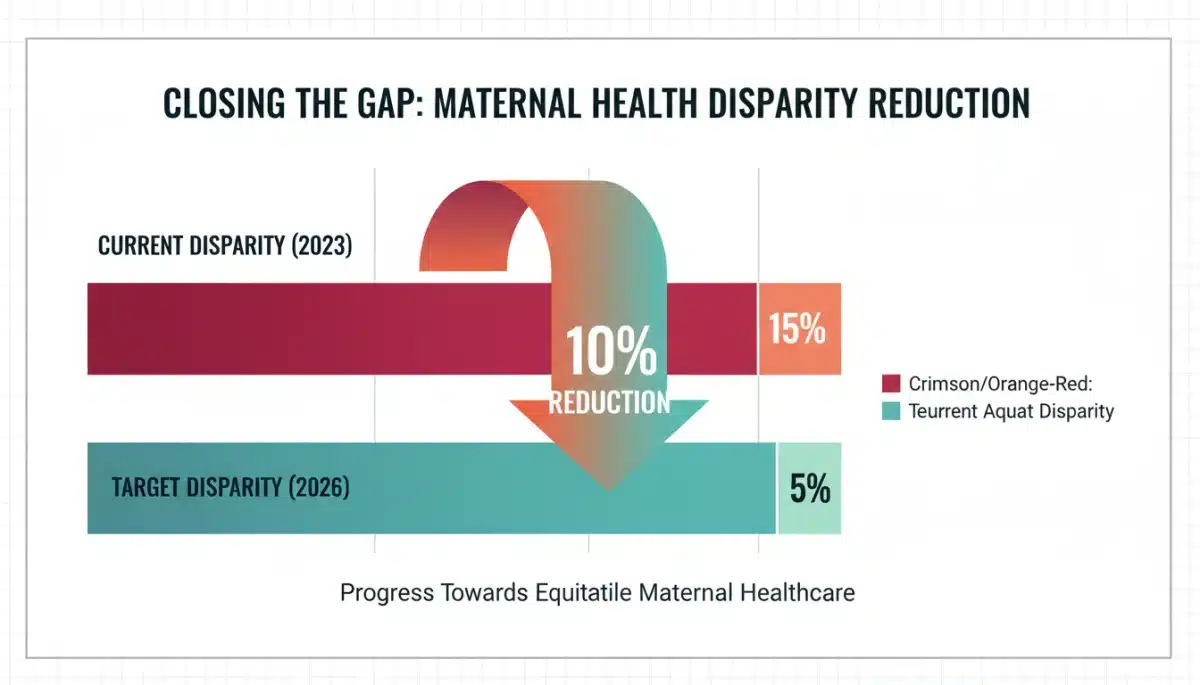
Impact on Women by 2026: What to Expect from Federal Maternal Health Initiatives
The overarching goal of the new federal maternal health initiatives is a measurable and significant improvement in the health and well-being of women across the nation by 2026. This includes a reduction in maternal mortality, severe maternal morbidity, and inequities in care access and quality.
For individual women, this could mean better access to prenatal and postpartum care, more supportive birthing experiences, and improved mental health services. The initiatives aim to empower women to advocate for their health and receive the best possible care.
Expectations are high that these federal maternal health initiatives will lead to a healthier generation of mothers and babies, fostering stronger families and communities. The 2026 target serves as a powerful motivator for all involved.
Key Outcome Projections
- Reduced rates of preventable maternal deaths and complications.
- Improved health equity, particularly for racial and ethnic minority groups.
- Greater satisfaction with maternal healthcare experiences.
The government projects a noticeable shift in national maternal health statistics over the next few years. The success of these federal maternal health initiatives will be closely monitored through various data points and public health reports.
These projections underscore the urgency and comprehensive nature of the federal maternal health initiatives, reflecting a commitment to tangible results. The focus remains steadfast on achieving a healthier future for women.
Funding and Resources Allocated to Maternal Health
To support the ambitious goals of the federal maternal health initiatives, significant funding and resources have been allocated. This financial commitment underscores the seriousness with which the federal government is approaching this public health crisis.
The appropriations include direct grants to states, funding for research and development of new maternal care technologies, and support for workforce development programs. These investments are designed to create a robust and sustainable maternal healthcare ecosystem.
Transparency in how these funds are utilized will be key, with regular reporting mechanisms in place to track progress and ensure accountability. The effective deployment of these resources is vital for the success of the federal maternal health initiatives.
Strategic Allocation of Funds
- Millions directed towards state-level maternal health programs.
- Grants for innovative community-based care models.
- Investment in maternal health data infrastructure and research.
The strategic allocation of these resources is intended to maximize impact, targeting areas with the greatest need and interventions with the highest potential for success. The federal maternal health initiatives are built on a foundation of evidence-based practices.
This includes ensuring that resources reach rural areas and urban communities facing significant health disparities. The comprehensive nature of the funding reflects the broad scope of the federal maternal health initiatives.
Challenges and Opportunities for Implementation of Federal Maternal Health Initiatives
While the new federal maternal health initiatives present a monumental opportunity to improve women’s health, their implementation will not be without challenges. Navigating diverse state regulations, ensuring equitable distribution of resources, and overcoming existing systemic barriers are critical hurdles.
However, these challenges also present opportunities for innovation and collaboration among federal, state, and local entities, as well as private organizations. The collective effort is crucial to successfully implement these federal maternal health initiatives.
Engaging communities directly and empowering local leaders will be instrumental in tailoring these initiatives to meet specific regional needs. This localized approach is essential for the long-term success of the federal maternal health initiatives.
Overcoming Implementation Hurdles
- Coordination across multiple government agencies and private partners.
- Ensuring sustained funding and political will beyond the initial rollout.
- Addressing social determinants of health that impact maternal outcomes.
The success of the federal maternal health initiatives will largely depend on the ability of all stakeholders to work cohesively towards the common goal. Continuous evaluation and adaptation will be necessary to navigate unforeseen obstacles.
Furthermore, fostering trust within communities, particularly those historically underserved, is fundamental. The effectiveness of the federal maternal health initiatives relies on the willingness of women to access and utilize the services provided.

Future Outlook: Sustaining Progress Beyond 2026 with Federal Maternal Health Initiatives
Achieving the 2026 target for reducing the 15% disparity in maternal outcomes is an ambitious but achievable goal. However, the vision extends beyond this initial milestone, focusing on sustaining progress and continuously improving maternal health nationwide.
Future efforts will likely involve ongoing monitoring, policy adjustments based on new data, and continued investment in research and innovative care models. The federal government aims to establish a lasting legacy of robust maternal health support.
The long-term success of these federal maternal health initiatives will depend on their ability to integrate seamlessly into the broader healthcare landscape, becoming an intrinsic part of how the nation supports its mothers. This forward-thinking approach is vital.
Long-Term Vision for Maternal Health
- Establishment of permanent federal maternal health oversight bodies.
- Continuous research into emerging maternal health challenges and solutions.
- Integration of maternal health into broader public health strategies.
The commitment to maternal health is not a one-time effort but an ongoing dedication to the well-being of women and families. The federal maternal health initiatives lay the groundwork for this sustained commitment.
By building a resilient and responsive system, the government hopes to ensure that every woman receives the care she needs, regardless of her background or location. This is the ultimate aspiration of the federal maternal health initiatives.
| Key Initiative Area | Brief Description |
|---|---|
| Expanded Coverage | Medicaid/CHIP extensions for postpartum care up to 12 months. |
| Provider Training | Implicit bias training and culturally competent care models. |
| Community Support | Funding for local organizations and telehealth expansion. |
| Data & Research | Enhanced data collection and investment in maternal health research. |
Frequently Asked Questions About Federal Maternal Health Initiatives
The primary goals are to reduce the 15% disparity in maternal outcomes for women by 2026, improve access to quality care, and enhance support for pregnant and postpartum individuals. These initiatives address systemic inequities and foster better health for mothers and babies.
Women in rural areas are expected to benefit significantly from increased funding for rural health clinics, expanded telehealth services, and programs designed to attract and retain maternal-fetal medicine specialists, directly addressing access barriers.
Implicit bias training is mandatory for federally funded maternal health providers to ensure culturally competent and equitable care. This aims to eliminate unconscious biases that contribute to disparities in treatment and outcomes for diverse populations.
Progress will be tracked through enhanced data collection, regular reporting on maternal mortality and morbidity rates, and evaluations of program effectiveness. Transparent accountability mechanisms are in place to monitor the impact of these federal maternal health initiatives.
Yes, the initiatives emphasize integrating mental health services into routine maternal care. This recognizes the critical link between mental well-being and overall maternal health outcomes, providing comprehensive support for women throughout their journey.
Looking Ahead: The Future of Maternal Health in the U.S.
The rollout of new federal maternal health initiatives marks a pivotal moment in the nation’s commitment to women’s health. While the 2026 target of addressing the 15% disparity in outcomes is ambitious, the comprehensive nature of these programs offers a strong foundation for success. It is crucial for stakeholders at all levels to collaborate, ensuring that these federal maternal health initiatives translate into tangible improvements for every woman. The coming years will demonstrate the transformative power of these dedicated efforts.