New Data on Fertility Benefits: U.S. Employer Offerings 2026

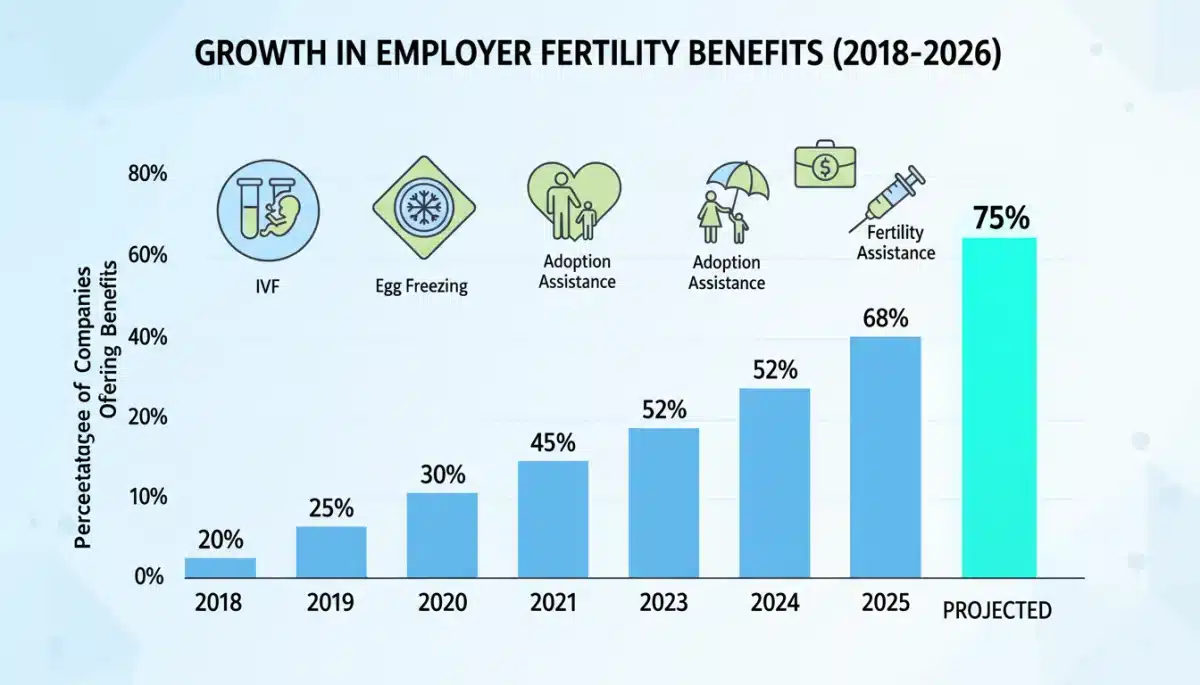
New data on fertility benefits in 2026 shows that more U.S. employers are expanding family-building support as part of broader workplace health and retention strategies. Companies are increasingly offering coverage for IVF treatments, fertility preservation, surrogacy assistance, adoption support, and reproductive health services to meet growing employee demand for comprehensive benefits.
In the field of human resources management, analysts say fertility benefits are becoming a competitive factor in recruitment and employee retention, particularly among large corporations and technology firms. Employers are also placing greater emphasis on inclusivity by extending coverage to single parents, LGBTQ+ families, and nontraditional family-building pathways.
Looking ahead, workers and HR professionals should monitor changes in employer-sponsored health plans, state-level fertility coverage mandates, and healthcare cost trends affecting reproductive benefits. Industry experts expect fertility support programs to continue expanding throughout 2026 as workplace benefit expectations evolve across.
The Evolving Landscape of Fertility Benefits in 2026
The landscape of fertility benefits 2026 is undergoing a transformative period, driven by societal shifts and a deeper understanding of diverse family-building journeys. Employers are recognizing that comprehensive support extends beyond traditional health insurance, encompassing a range of reproductive health services.
This evolution is not merely a trend but a response to concrete data indicating the financial and emotional burden individuals face when pursuing fertility treatments. Companies are increasingly viewing fertility benefits as a vital component of a holistic employee wellness strategy.
The new data highlights a move towards more inclusive and flexible benefit structures, aiming to cater to a wider array of employee needs. This includes support for LGBTQ+ individuals, single parents by choice, and those facing specific medical challenges.
Increased Coverage for IVF and Advanced Reproductive Technologies
One of the most significant findings in the new data on fertility benefits 2026 is the substantial increase in employers offering coverage for In Vitro Fertilization (IVF) and other advanced reproductive technologies. This reflects a growing awareness of IVF’s role in successful family building.
Many companies are now providing higher lifetime maximums for IVF cycles, acknowledging the often-repeated nature of these treatments and their considerable cost. This expanded financial support directly addresses a major barrier for many individuals and couples.
- Expanded financial limits for multiple IVF cycles.
- Inclusion of preimplantation genetic testing (PGT) within coverage.
- Access to specialized fertility clinics and networks.
Broader Support for Egg Freezing and Fertility Preservation
Fertility preservation, particularly egg freezing, is another area seeing considerable growth in employer-provided benefits in 2026. This benefit empowers employees to proactively manage their reproductive timelines, offering flexibility in career and family planning.
The inclusion of egg freezing often caters to women who wish to delay childbearing for various personal or professional reasons, or those facing medical treatments that could impact their future fertility. It represents a forward-thinking approach to employee well-being.
- Coverage for egg retrieval and storage costs.
- Access to counseling for fertility preservation decisions.
- Options for sperm freezing and embryo storage as well.
Addressing Infertility and Family Building Inclusivity
The conversation around fertility benefits 2026 has significantly broadened to emphasize inclusivity, recognizing that family-building journeys are diverse. Employers are moving beyond a narrow definition of infertility to support a wider range of paths to parenthood.
This shift ensures that benefits are accessible to all employees, regardless of marital status, sexual orientation, or biological challenges. It underscores a commitment to equitable access to family-building resources.
The focus on inclusivity helps foster a more supportive and understanding workplace culture, where employees feel valued and supported in their personal lives. This is a key driver for attracting and retaining diverse talent.
Support for Adoption and Surrogacy
Beyond medical fertility treatments, the new data on fertility benefits 2026 indicates a strong trend towards comprehensive support for adoption and surrogacy. These alternative routes to parenthood are increasingly recognized as essential components of a robust family-building benefit package.
Employers are offering financial assistance for adoption fees, legal costs, and travel expenses, significantly easing the financial burden for prospective adoptive parents. Surrogacy benefits often include coverage for agency fees, legal costs, and medical expenses related to the gestational carrier.
This holistic approach demonstrates a commitment to supporting all forms of family creation, aligning with modern family structures. It allows employees to choose the path that best suits their circumstances without undue financial strain.
Mental Health Support Integrated with Fertility Care
A crucial development in fertility benefits 2026 is the increased integration of mental health support alongside medical fertility treatments. The emotional toll of infertility and family-building challenges is profound, and employers are beginning to acknowledge this critical need.
This includes access to specialized counseling, support groups, and psychological services tailored for individuals and couples undergoing fertility treatments or navigating adoption/surrogacy processes. Recognizing the mental health component is vital for overall well-being.
Such integrated support ensures that employees receive comprehensive care, addressing both the physical and emotional aspects of their journey. It represents a more compassionate and informed approach to employee benefits.
The Impact on Employee Attraction and Retention
The provision of robust fertility benefits 2026 is proving to be a powerful tool for employee attraction and retention in the competitive U.S. job market. Companies are leveraging these offerings to differentiate themselves and appeal to a broader talent pool.
Prospective employees, particularly those in their prime career-building and family-planning years, are increasingly scrutinizing benefit packages for this type of support. A comprehensive fertility benefit can be a decisive factor in accepting a job offer.
For current employees, access to these benefits fosters loyalty and reduces stress, allowing them to focus on their work while pursuing their family goals. This contributes to a more engaged and productive workforce.
Competitive Advantage and Employer Branding
Offering leading fertility benefits 2026 significantly enhances an employer’s brand as a progressive and employee-centric organization. This positive image extends beyond current employees to potential hires and the broader industry.
Companies known for their comprehensive family-building support often attract more diverse and highly skilled candidates. This creates a virtuous cycle where strong benefits lead to a stronger talent pool, further boosting the company’s reputation.
The competitive advantage gained through these benefits is not just about recruitment but also about creating a culture that values and supports employees through all life stages. This contributes to long-term organizational success.
Financial Implications and ROI for Employers
While the initial investment in comprehensive fertility benefits 2026 can be substantial, employers are increasingly recognizing the positive return on investment (ROI). This ROI is not solely financial but also encompasses improved employee morale, productivity, and reduced turnover.
The cost of replacing an employee can be significant, often far outweighing the cost of providing comprehensive benefits that retain valuable talent. Fertility benefits contribute to a stable and committed workforce.
Furthermore, these benefits can lead to a healthier and less stressed workforce, potentially reducing healthcare costs related to stress-induced conditions. The long-term benefits clearly outweigh the immediate expenses.
Navigating the Complexity of Benefit Design
Designing effective fertility benefits 2026 packages requires careful consideration of various factors, including cost, employee demographics, and legal compliance. Employers must navigate a complex landscape to create programs that are both impactful and sustainable.
The process often involves collaboration with benefit consultants, legal experts, and fertility specialists to ensure that coverage is comprehensive, compliant, and meets the diverse needs of the workforce. It’s an ongoing effort to refine and adapt offerings.
Understanding the nuances of different treatment options and family-building paths is crucial for crafting a benefit plan that truly supports employees. This involves surveying employee needs and staying abreast of medical advancements.
Customization and Flexibility in Benefit Plans
A key trend in fertility benefits 2026 is the move towards greater customization and flexibility in benefit plans. Recognizing that one-size-fits-all approaches are no longer adequate, employers are offering more personalized options.
This might include tiered benefit structures, health savings accounts (HSAs) that can be used for fertility expenses, or partnerships with specialized fertility benefit providers. The goal is to empower employees to choose the support that best fits their individual journey.
Flexible plans also allow for easier adaptation to changing medical guidelines or employee needs, ensuring that the benefits remain relevant and effective over time. This agility is vital in a rapidly evolving field.
Legal and Ethical Considerations for Employers
As employers expand their fertility benefits 2026, navigating the complex legal and ethical landscape becomes increasingly important. Compliance with federal and state anti-discrimination laws, such as the Pregnancy Discrimination Act and the Americans with Disabilities Act, is paramount.
Ethical considerations also play a significant role, particularly regarding equitable access to benefits for all employees, irrespective of their marital status, sexual orientation, or gender identity. Transparency and fairness are key principles.
Employers must continually review their policies and practices to ensure they are both legally sound and ethically responsible. This proactive approach helps avoid potential legal challenges and fosters a trustworthy workplace environment.
Future Outlook for Fertility Benefits Beyond 2026
The trajectory for fertility benefits 2026 suggests continued expansion and refinement in the years to come. The momentum generated by current trends indicates that these benefits will become an even more entrenched part of standard employee compensation packages.
Innovations in medical technology and evolving societal norms will undoubtedly shape future offerings, pushing employers to adapt and enhance their support. The focus will likely remain on inclusivity and comprehensive care.
As more data emerges on the positive impact of these benefits on employee well-being and business outcomes, even more companies are expected to invest in robust fertility support. This signifies a long-term commitment to family-friendly workplaces.
Technological Advancements and Personalized Care

Future fertility benefits 2026 and beyond will likely be influenced by rapid technological advancements in reproductive medicine. This could include more personalized treatment plans, AI-driven diagnostics, and less invasive procedures.
Employers may integrate these new technologies into their benefit offerings, ensuring employees have access to the most cutting-edge and effective treatments available. The emphasis will be on optimizing outcomes and reducing the physical and emotional burden of treatments.
Personalized care, enabled by technology, will allow for more tailored and efficient fertility journeys, making the process less daunting for employees. This will be a significant area of development for future benefit design.
The Role of Policy and Advocacy
Policy and advocacy will continue to play a crucial role in shaping the future of fertility benefits 2026. Legislative efforts at both state and federal levels could mandate certain levels of coverage, further standardizing access to fertility care.
Advocacy groups will continue to push for greater accessibility, affordability, and equity in fertility treatments, influencing public opinion and corporate policies. Their work helps keep the conversation on fertility benefits at the forefront.
The interplay of medical advancements, employer initiatives, and public policy will collectively drive the evolution of fertility benefits, ensuring that more individuals have the opportunity to build the families they desire. This collaborative effort is essential for progress.
| Key Point | Brief Description |
|---|---|
| Expanded IVF Coverage | More employers offering higher lifetime maximums for IVF and related treatments. |
| Inclusivity Focus | Broader support for adoption, surrogacy, and diverse family-building paths. |
| Mental Health Integration | Increased access to specialized counseling and psychological support services. |
| Talent Attraction | Comprehensive fertility benefits act as a significant draw for top talent. |
Frequently Asked Questions About Fertility Benefits 2026
Key trends for fertility benefits 2026 include expanded coverage for IVF, increased support for egg freezing, and a greater emphasis on inclusivity for adoption and surrogacy. Mental health integration is also a significant development, reflecting a holistic approach to employee well-being.
U.S. employers are expanding fertility benefits to meet growing employee demand, attract and retain top talent, and foster a more inclusive workplace. Providing comprehensive family-building support enhances employer branding and contributes to higher employee satisfaction and loyalty.
While coverage varies by employer, the trend for fertility benefits 2026 is towards greater inclusivity. Many plans now cover not only medical fertility treatments like IVF but also financial assistance for adoption and surrogacy, supporting diverse paths to parenthood.
Mental health support is increasingly integrated into fertility benefits 2026, recognizing the emotional challenges of family building. This includes access to specialized counseling, therapy, and support groups designed to help employees navigate the psychological aspects of their journey.
Employees should look for comprehensive coverage for medical treatments, high lifetime maximums, and support for alternative family-building methods. Also, check for integrated mental health resources, clear eligibility criteria, and flexibility in choosing providers within the fertility benefits 2026 offerings.
Looking Ahead
The new data on fertility benefits 2026 underscores a significant and positive shift in how U.S. employers support their workforce. This evolution is not just about healthcare but about fostering inclusive environments where employees can thrive both professionally and personally.
As these trends continue, companies will likely further refine their offerings, driven by employee needs, technological advancements, and a deeper understanding of the diverse paths to family building.
Monitoring policy changes and industry best practices will be crucial for both employers and employees in the coming years, ensuring that fertility benefits remain a cornerstone of modern compensation packages.